

Contemporary Living Room and High-Fidelity Audio: A Match (Finally) Made in Heaven
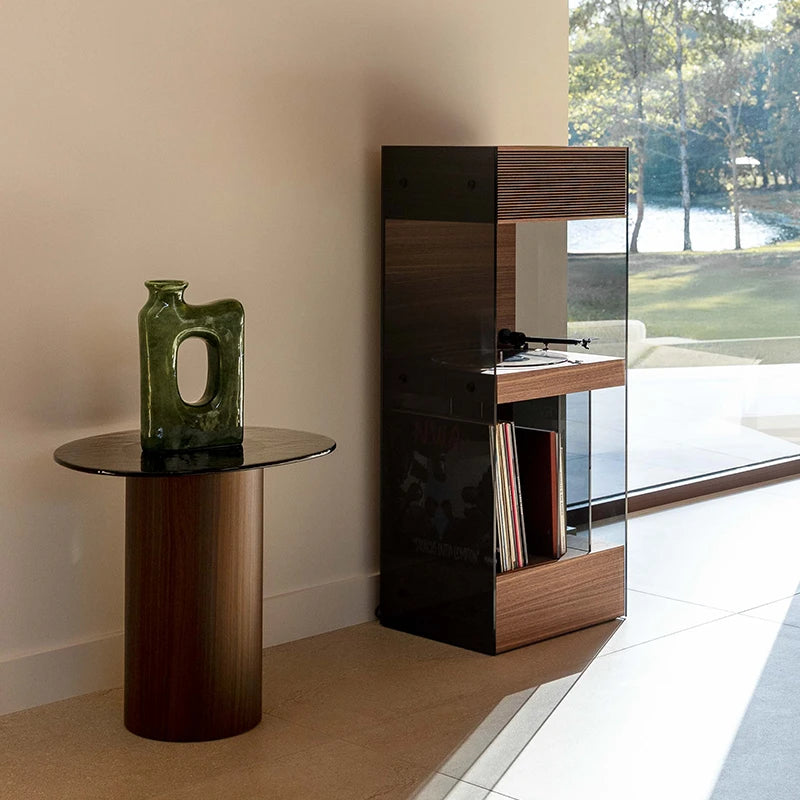
Light-colored hardwood floors, large picture windows, smooth walls: the contemporary living room is a visual masterpiece. But when it comes to acoustics, it’s a hostile environment. Reflective surfaces, open spaces, a lack of textiles… everything works against good sound reproduction. And yet, this is precisely the room where we want to listen to music.
The paradigm has shifted. The hi-fi speaker is no longer a black box hidden behind a piece of furniture. It is displayed just like an architect’s lamp or a designer vase. The global market for wireless speakers, estimated at approximately 36 billion euros in 2026, confirms the demand for home audio solutions designed as objects in their own right.
This article outlines specific guidelines—including material selection, placement, and acoustic treatment using furniture and smart technology—to ensure that your designer speaker enhances both your listening experience and your home’s interior.
Speakers as Decorative Objects: Choosing the Right Materials
Three materials dominate the world of designer speakers, each with its own sonic and visual character.
Anodized aluminum embodies modernity. Rigid and lightweight, it minimizes unwanted vibrations and enhances precise high-frequency reproduction. Its matte or brushed finish complements minimalist interiors where every line counts.
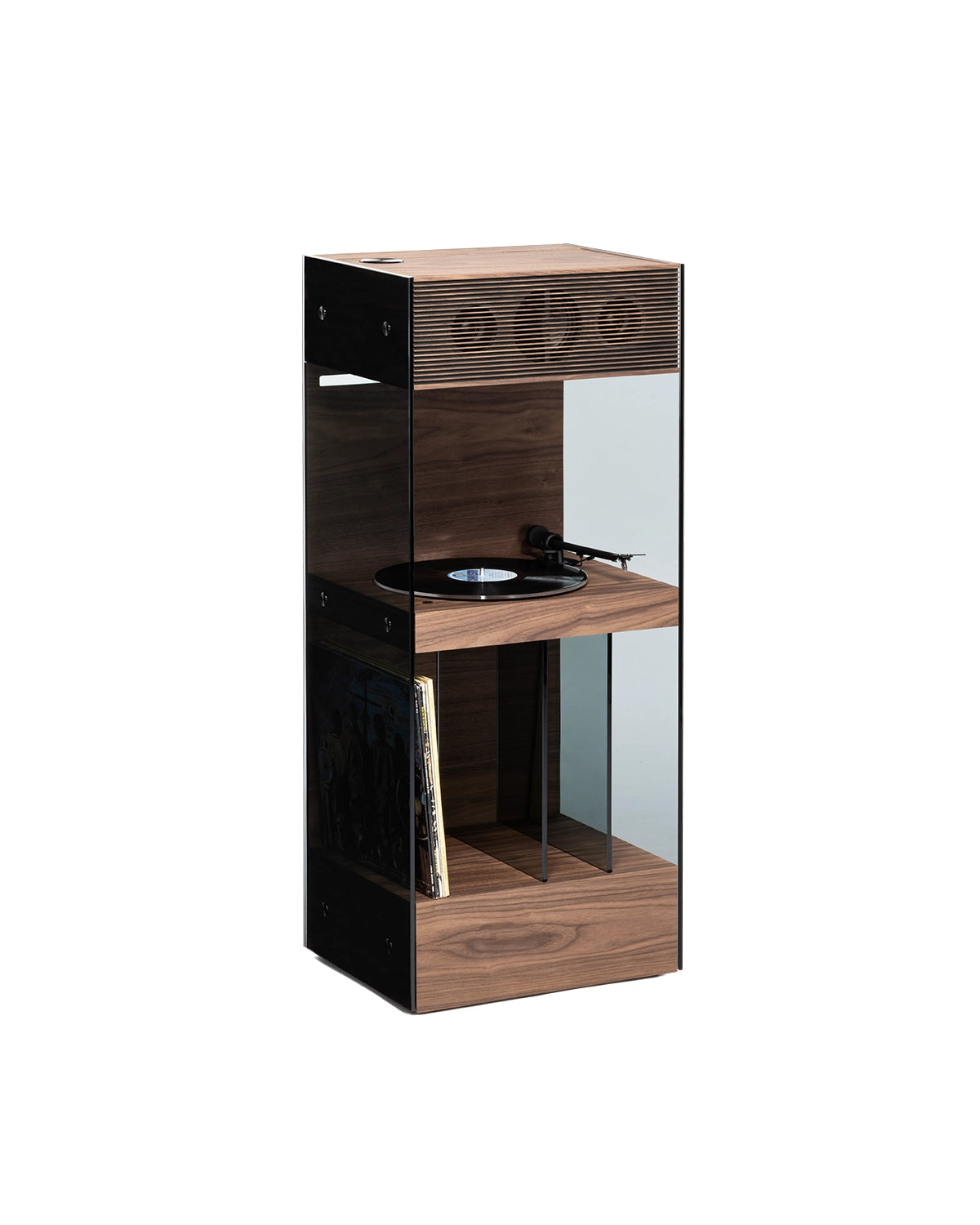
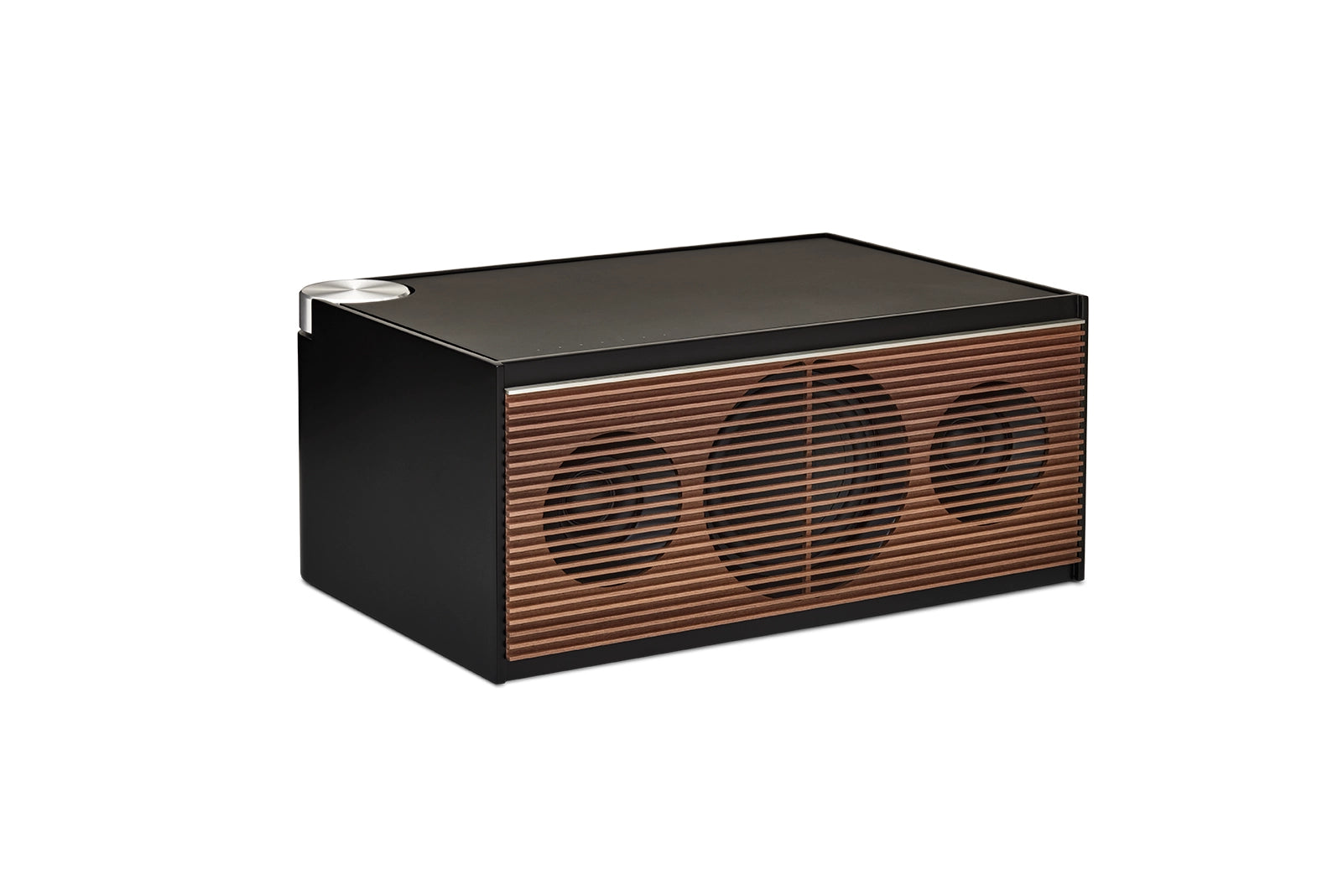
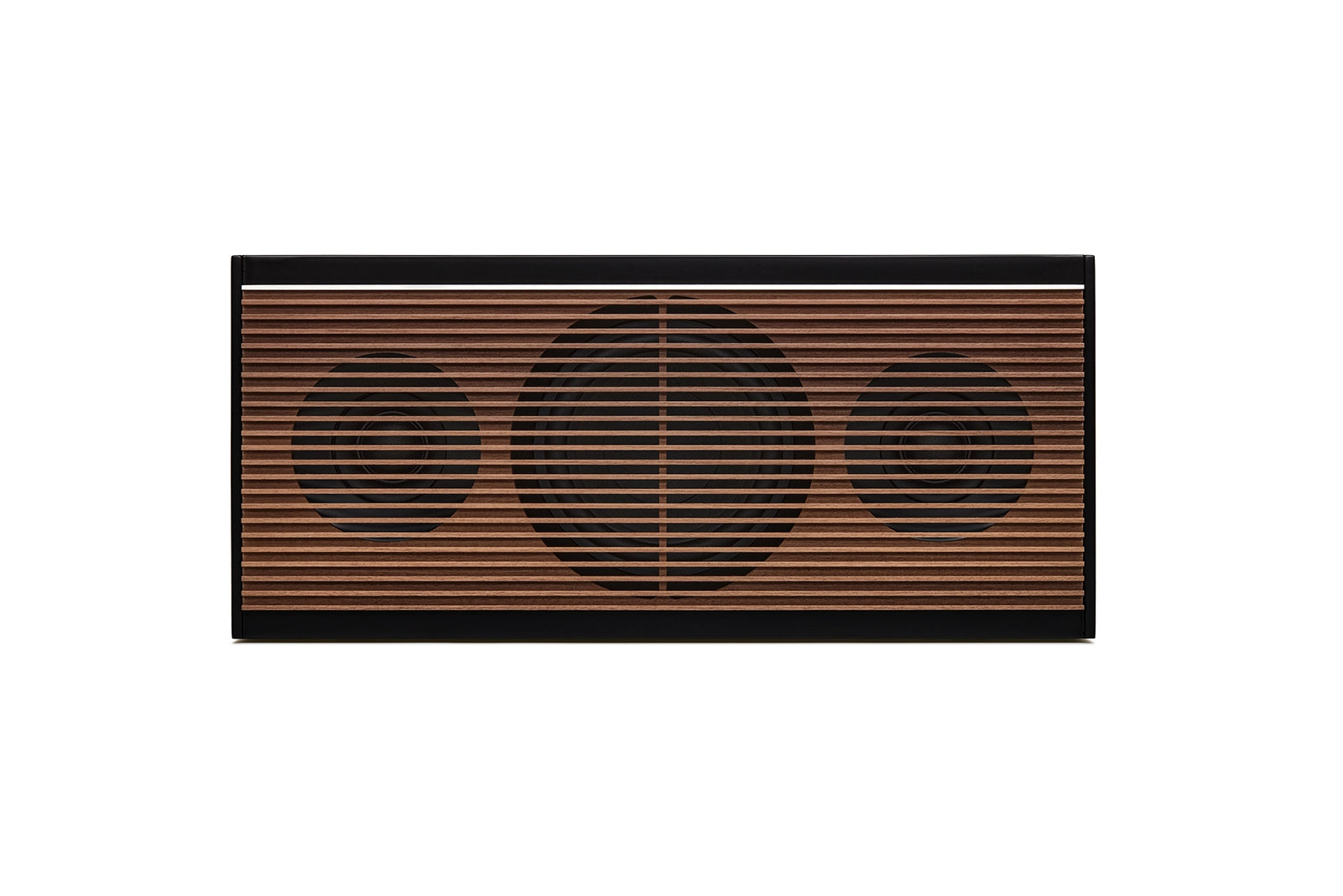
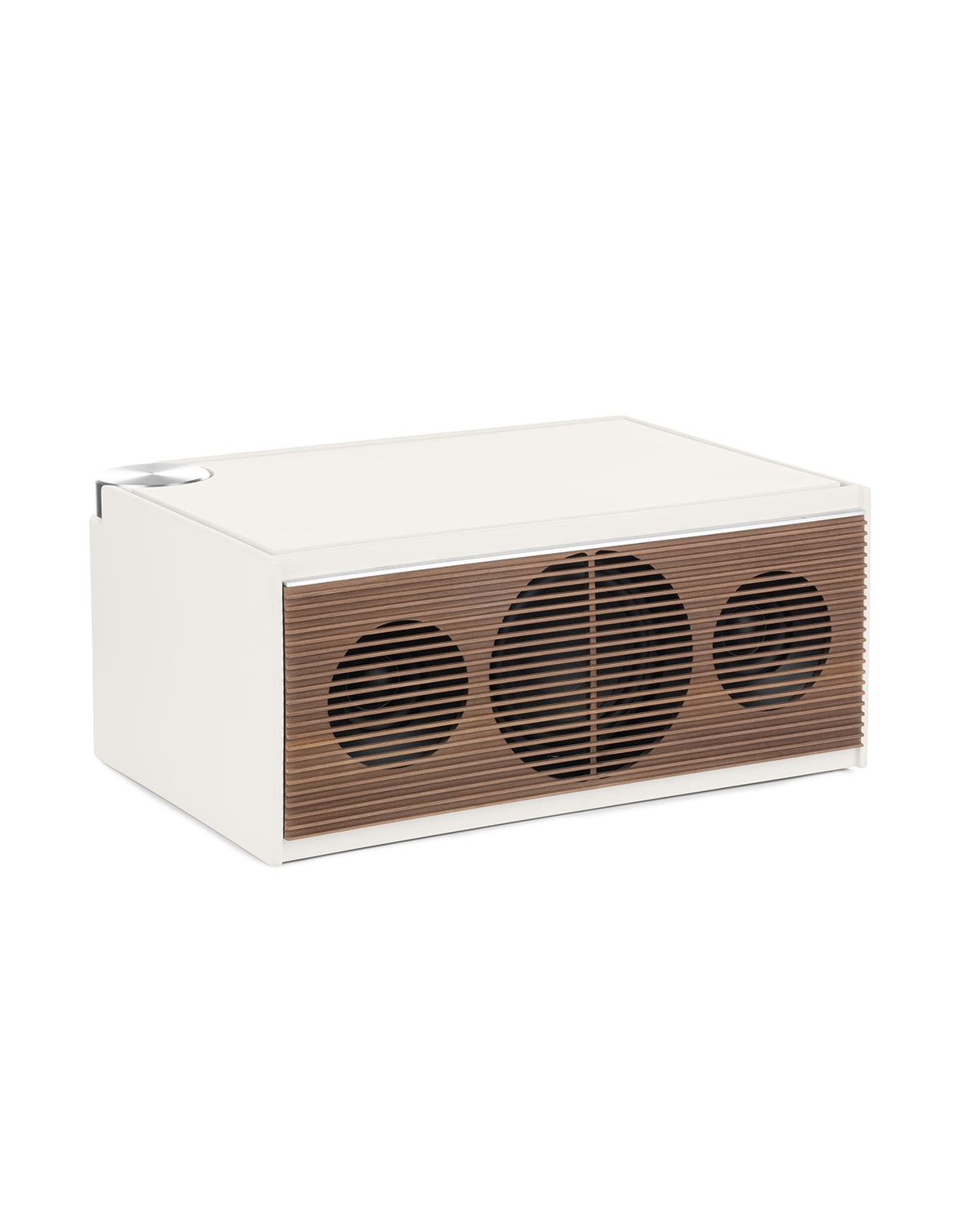
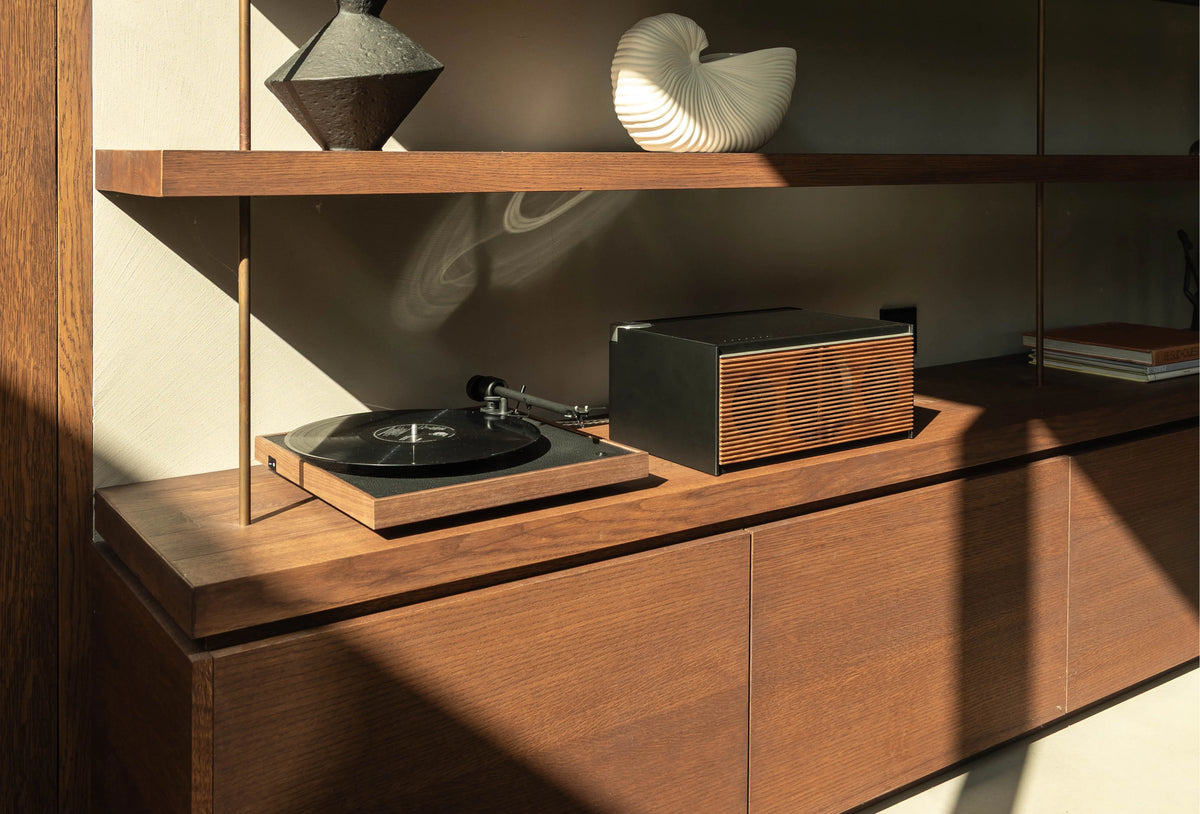
Solid wood remains the premier material for acoustics. Its natural damping properties produce deep bass and warm midrange tones that are impossible to replicate with molded plastic. Walnut, Oak, ash: the wood species are chosen just like hardwood flooring or furniture, to harmonize with the living room’s color scheme. It is, in fact, the material of choice at our Manufacture du Son in Hossegor, where traditional cabinetmaking has been combined with acoustic engineering for over 80 years.
The woven acoustic fabric adds a welcome visual softness. It absorbs some of the unwanted reflections and softens the speaker's presence in the room, while allowing sound to pass through without coloration.
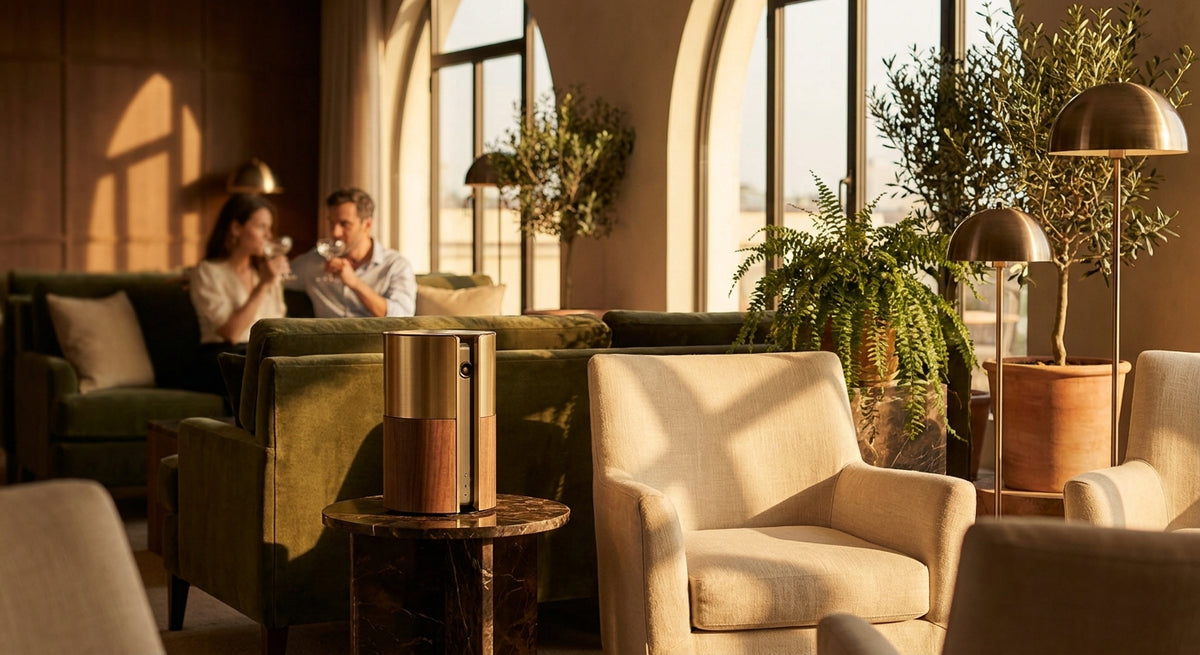
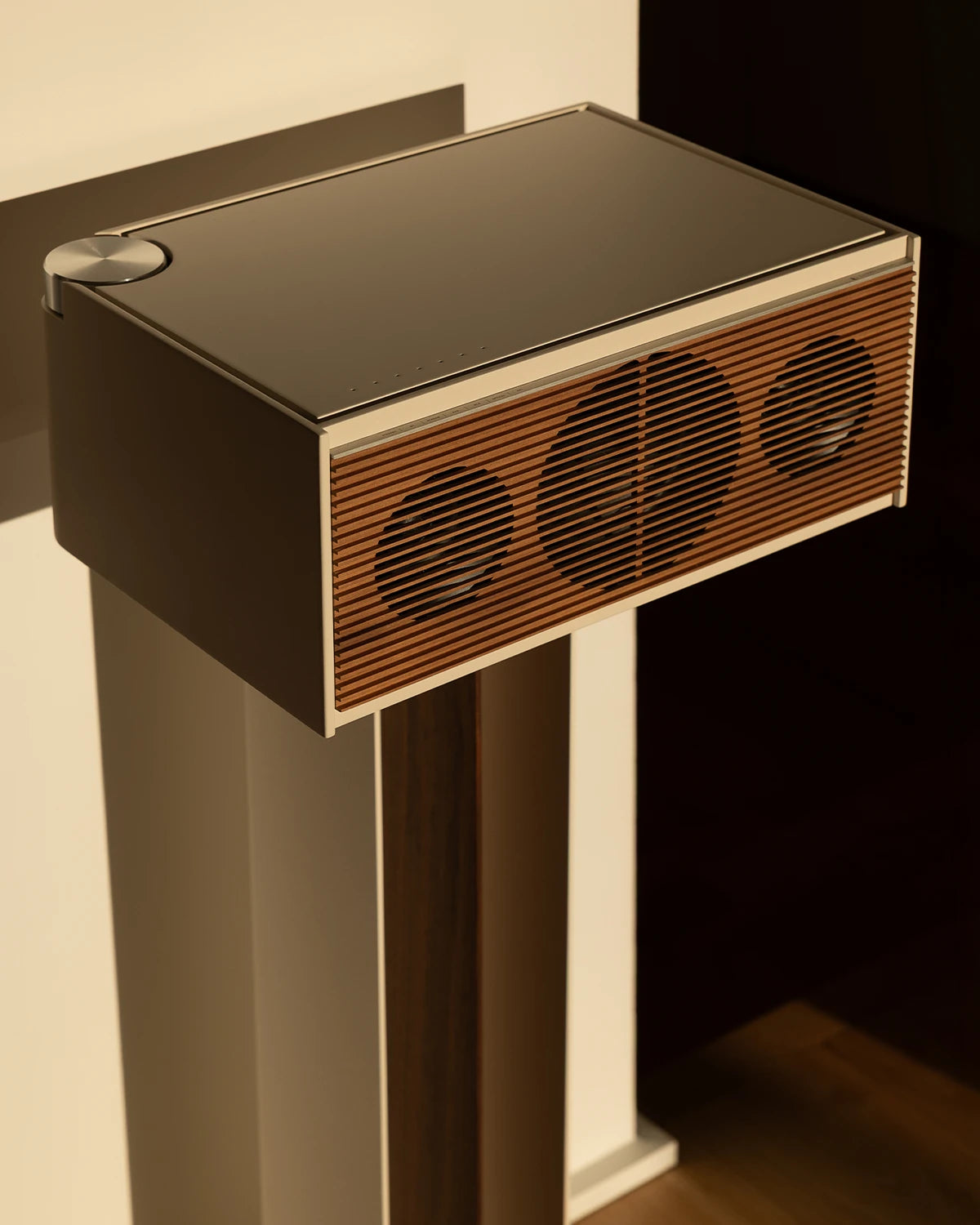
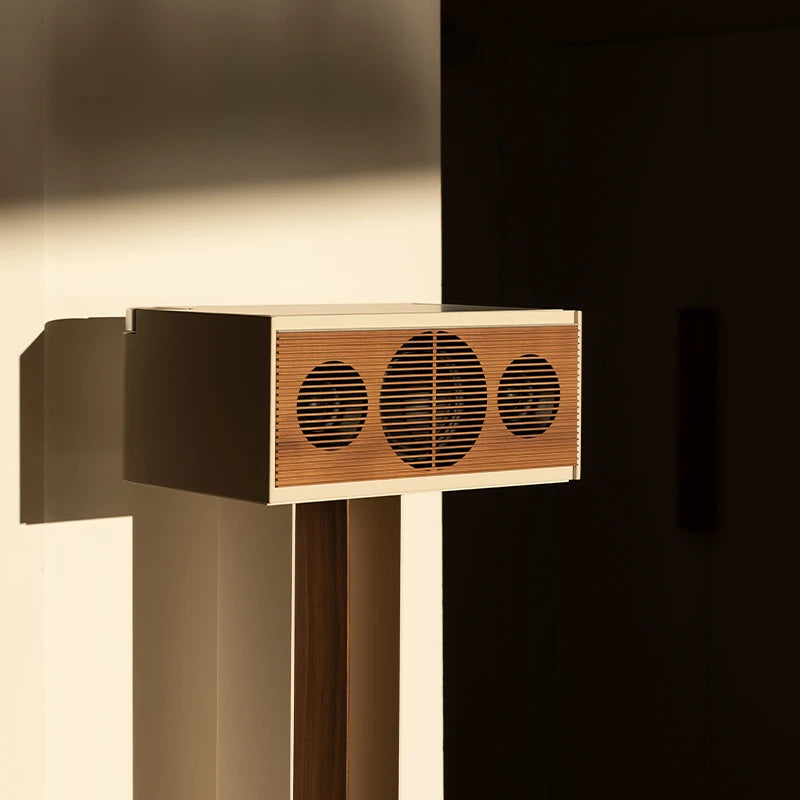
The “warm minimalism” trend perfectly captures the spirit of the moment: natural materials combined with advanced connected technologies to meet both aesthetic demands and environmental concerns. With colors that complement the decorative palette and sculptural forms created by designers such as Samuel Accoceberry and Iratzoki Studio, the speaker complements the interior rather than competing with it.
French expertise in audio design—combined with local manufacturing and high-quality materials—is a strong point of differentiation. Our products, which have won the Red Dot Design Award and the Diapason d'Or, prove that it is possible to demand superior sound quality without sacrificing elegance.
Investing: The Golden Rule for Not Wasting Your Investment
You can invest in the best hi-fi speaker on the market, but if it’s placed incorrectly, you’ll lose 30 to 40 percent of its acoustic potential. That’s the figure every music lover should keep in mind before placing their speakers on the floor or pushing them right up against a wall.
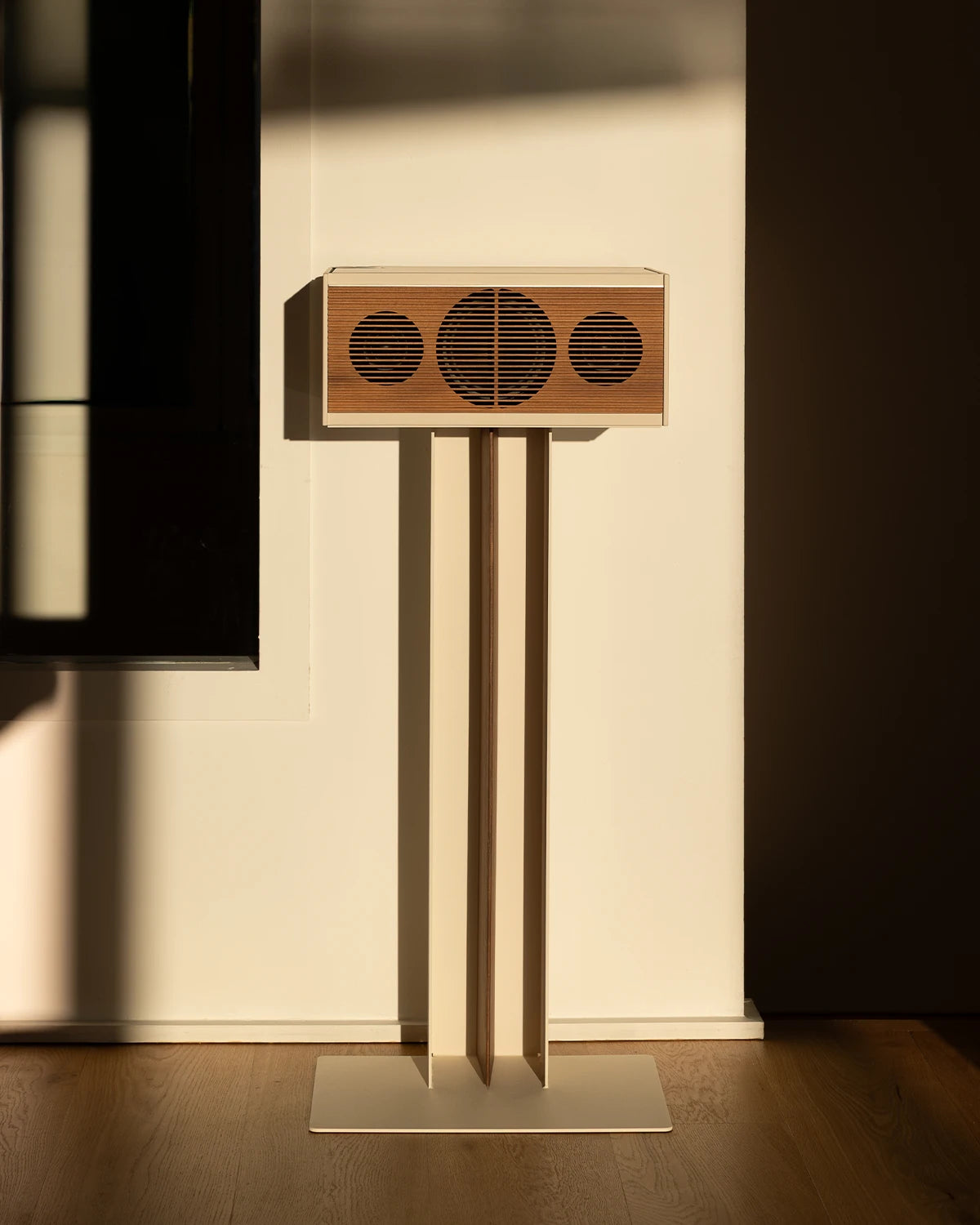
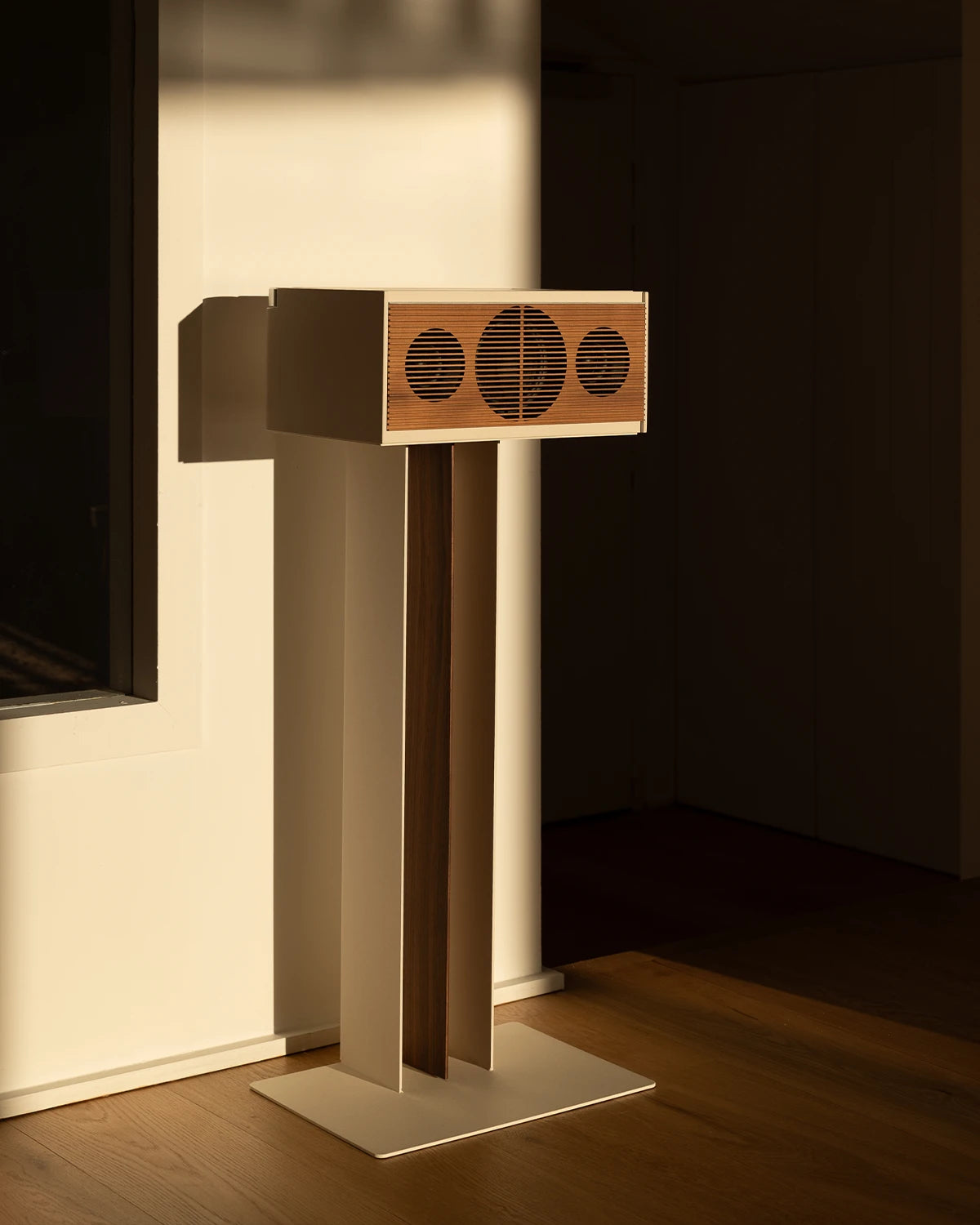
The ideal height is between 100 and 110 cm—that is, at ear level when seated. At this height, the tweeters and midrange drivers reach you directly, without unwanted reflections from the floor or ceiling.
Keep a minimum distance of 30 cm from walls. Placing a speaker directly against a wall artificially amplifies the bass and creates muffled resonances that distort the sound. Simply moving it back a few dozen centimeters is enough to restore a controlled, natural bass response.
The equilateral listening triangle remains the cornerstone of stereo sound. Imagine a triangle in which the two speakers and your listening chair form the three vertices, all at equal distances. Angle each speaker slightly toward you (the famous “toe-in”) to focus the stereo image on the listening position.
Each living room layout calls for a specific approach. A classic rectangular living room naturally lends itself to a listening triangle. An open-concept space requires speakers capable of wide dispersion, since the absence of side walls reduces useful reflections. An L-shaped living room often requires focusing on a defined listening area rather than attempting to cover the entire space.
In terms of power, aim for 50 to 80 W RMS for a living room measuring 20 to 30 m². Below that, the sound will lack body during dynamic passages. Above that, you risk overfilling the room without any noticeable improvement in sound quality.
Furniture as an Acoustic Ally: Treating the Room Without Changing Its Appearance
The contemporary living room is filled with hard surfaces: hardwood floors, polished concrete, high ceilings, large windows, and bare walls. The result is excessive reverberation that drowns out musical details in a fog of sound. The clarity of vocals and midrange frequencies suffers particularly as a result.
Here's a tip that most audio guides overlook: your furniture is already a tool for acoustic treatment. You don't need unsightly foam panels to transform the sound in your living room.
- A large rug placed between the speakers and the listening position absorbs floor reflections. The improvement in midrange clarity is immediate and often surprising.
- Thick curtains in front of the large picture windows reduce side reflections, one of the main sources of sound coloration in contemporary living rooms.
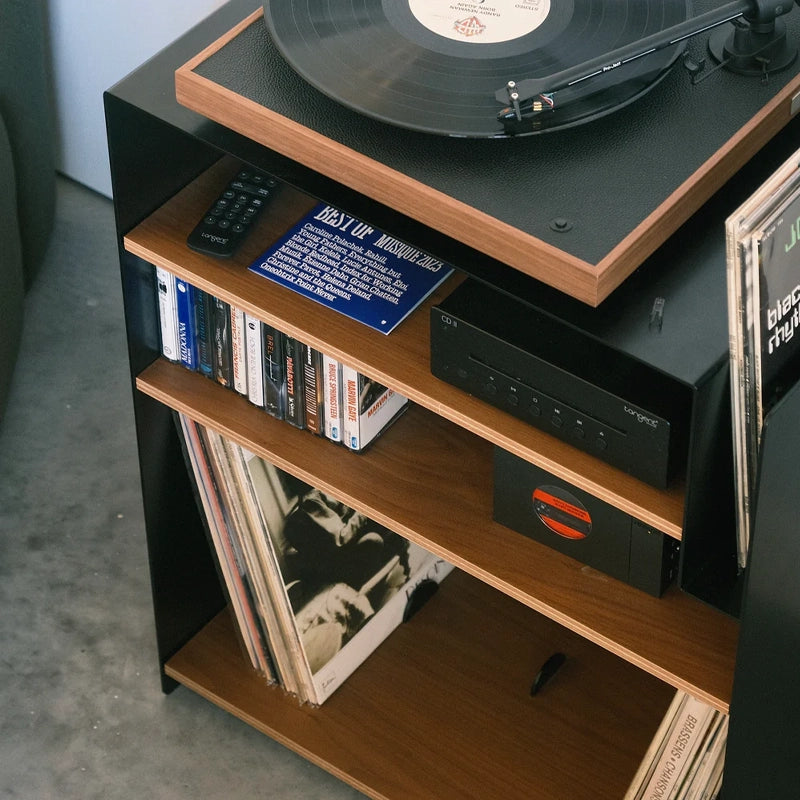
- Well-stocked libraries diffuse sound unevenly due to the varying sizes of the books and other objects. This diffusion effect reduces the “boxy” sound without requiring any professional acoustic treatment.
To take it a step further, professionals recommend covering 35 to 45 percent of the ceiling’s surface with evenly distributed sound-absorbing panels and adding two absorption zones on the most reflective walls. These adjustments radically transform the acoustics without altering the partitions or compromising the aesthetics.
Acoustics is now recognized as an active design tool, just like lighting or thermal design. Interior architects use it to define zones, create smoother transitions, and make spaces more inviting. Your living room deserves the same attention.
Connected Technologies: The End of the Trade-off Between Cables and Aesthetics
A minimalist living room has no place for exposed wires. Speaker cables snaking along baseboards, visible power supplies, and a bulky amplifier sitting on a piece of furniture—all of that belongs to a bygone era. Wi-Fi and Bluetooth are now the expected standard for any new living room audio setup.
The Wi-Fi "multiroom " takes this concept a step further. From a single app, you can stream music throughout your home—without any wiring between rooms or a central amplifier. For a contemporary open-concept living room, this is a decisive selling point.
Automatic acoustic calibration brings design and performance together. These systems analyze the actual acoustics of your room and adjust the speaker's frequency response accordingly. The traditional trade-off between ideal placement and decorative integration disappears: the sound adapts to the space, not the other way around.
High-resolution audio has also become more widespread. About 38% of new models support FLAC, DSD, and MQA formats, with direct access to services like Spotify, Tidal, and Qobuz. Studio-quality sound at home is no longer reserved for audiophiles with massive hi-fi systems.
Our Wide Sound 2.0 technology exemplifies this convergence. By harnessing the reflection of sound off surrounding surfaces, it creates a 360° immersive experience that significantly expands the soundstage. In a large, open contemporary living room—where traditional directional speakers struggle to fill the space—this reflective diffusion approach makes an immediately noticeable difference. In France, 46 million people listen to digital audio every month, and 40% of French people subscribe to at least one paid audio service: the smart speaker is no longer just a gadget—it’s part of everyday life.
Integrating audio from the design phase: a standard practice in high-end interiors
In high-end residential projects, a trend has taken hold: the audio system is specified as early as the design phase, just like lighting or heating. People no longer choose their speakers after the last cushion has been placed. They plan for them well in advance.
If you're working with an architect or interior designer, here are the points to discuss during the initial briefing:
- Provide service ducts for the possible routing of power or network cables.
- Identify wall niches or mounts that are suitable for the optimal listening height (100 to 110 cm).
- Define the main listening area and arrange the layout accordingly.
- Plan for acoustic treatment by selecting appropriate wall coverings and furniture.
Acoustics now ranks on par with lighting and thermal design in interior architecture decisions. It is a design discipline in its own right, not a secondary technical constraint.
For professionals in architecture, interior design, and the hospitality industry, our CC LAB offers dedicated support for custom audio integration projects. From product selection to configuration multiroom, every detail is carefully considered to ensure it aligns with the project’s overall vision.
The 2026 comparisons confirm it: a real leap in quality becomes noticeable starting at €400. It’s an investment that pays for itself over the lifespan of the interior design project, which is often ten to fifteen years. You might as well choose a speaker that will stand the test of time just as well as a designer light fixture or an exceptional piece of furniture.
When Sound Becomes a Signature Element of Interior Design
Successful acoustic integration rests on four pillars: the selection of high-quality materials that complement your interior design, precise placement that adheres to recommended distances and the listening triangle, smart acoustic treatment using existing furniture, and connected technologies that free the space from the constraints of wiring.
A designer speaker is no longer a compromise between beauty and performance. It’s a statement piece for your home—an item that says something about you, your relationship with music, and the space you live in.
Think of your speaker as a long-term investment. Since 1938 and the founding of SIARE®, we have been convinced that craftsmanship and technology are not at odds with one another. They complement each other. French high-fidelity audio, designed and assembled at our Manufacture du Son in Hossegor, is living proof of this, every single day.